
Adding an LED light therapy device to your routine might seem simple enough…until you start sifting through the available options, trying to find the real deal amid a host of flashy marketing claims. It’s enough to give anyone decision paralysis, especially when your skin is on the line. But the solution lies in the science: Clinical studies offer clearer, more credible insights into how a device will actually perform. This evidence translates into peace of mind, ensuring you can trust the product you choose to invest in. Plus, given that not all products have clinical studies to their name, it creates a filter for products that aren’t worth your consideration.
Why Clinical Studies Matter in Skincare
It often feels like the skincare industry is flooded with an ever-growing number of products, but will they actually do what they say? How can you know whether the investment is worthwhile? Instead of placing your trust in marketing claims, refer to clinical studies to learn how products perform in standardized, documented tests.
Not all LED light therapy devices are supported by clinical studies (especially at the lower end of the price spectrum). Here’s why that matters:
- Clinical studies provide scientific evidence on how the device works and how the device can actually affect the skin. This paints a far clearer picture than marketing content, which is primarily used to sell the product.
- Scientific evaluations separate medical-grade devices from those without substantiated safety and efficacy assessments. This makes it easier to find a device that can yield noticeable results over time.
- LED light therapy clinical results can link a device to specific skin concerns (like fine lines or blemishes), answering crucial questions like, “Does red light therapy work for wrinkles?” or “Can blue light therapy help prevent breakouts?” Ultimately, this can help you find the best device for your skin goals.
How LED Light Therapy Works Beneath the Skin
LED light therapy, also known as photobiomodulation, works by transmitting specific wavelengths of light to the skin. These wavelengths stimulate mitochondria, the energy centers of your cells, and increase cellular energy production (called ATP).
LUMSUME's Contour devices use the clinically Near-infrared light, 760nm red light and 1800nm near-infrared light, to support skin rejuvenation. General scientific evidence of red and near-infrared light shows that:
- 760nm red light is commonly associated with natural cellular repair and renewal for a more radiant, refreshed-looking complexion.
- 1800nm near-infrared light is known to target deeper fibroblast cells to stimulate new collagen and elastin production for plumper, firmer, more youthful-looking skin.
Insights into the LUMSUME Beauty Mirror Clinical Study
The LUMSUME Beauty Mirror clinical study involved a four-week follow-up of 25 participants aged 30 to 65. Participants used the LUMSUME Beauty Mirror three times a week for 15 minutes each session. The study employed the following assessment methods to measure the device’s impact on wrinkles and visible signs of aging:
- Wrinkle grading scale
- Photodamage and skin texture assessment
- Digital photography
- Skin elasticity, hydration, and pigmentation evaluation
- Scan to evaluate surface roughness and texture
In addition, participants were provided with a self-assessment questionnaire to record their feedback on the effectiveness of at-home LED light therapy using the LUMSUME Beauty Mirror.
Before and After Results: What Changed
Three week after the final treatment, the study evaluation process revealed:
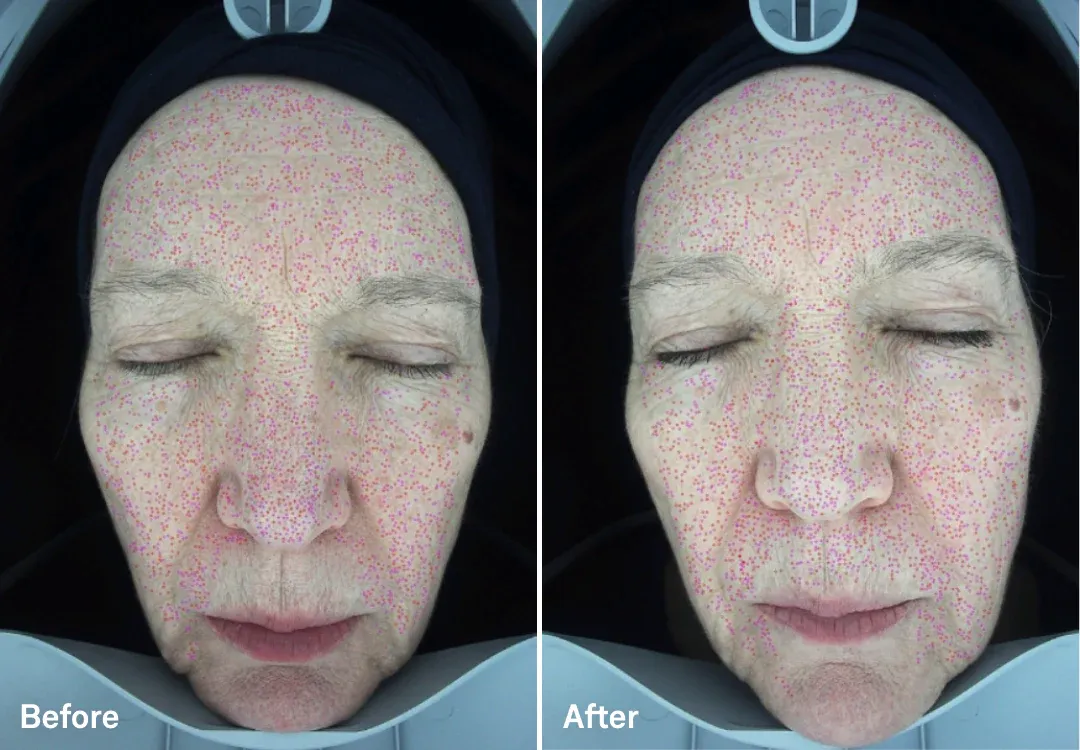
- 14.7% improvement in skin smoothness
- The study summary displays before-and-after images of a participant with visible reduction in pores:
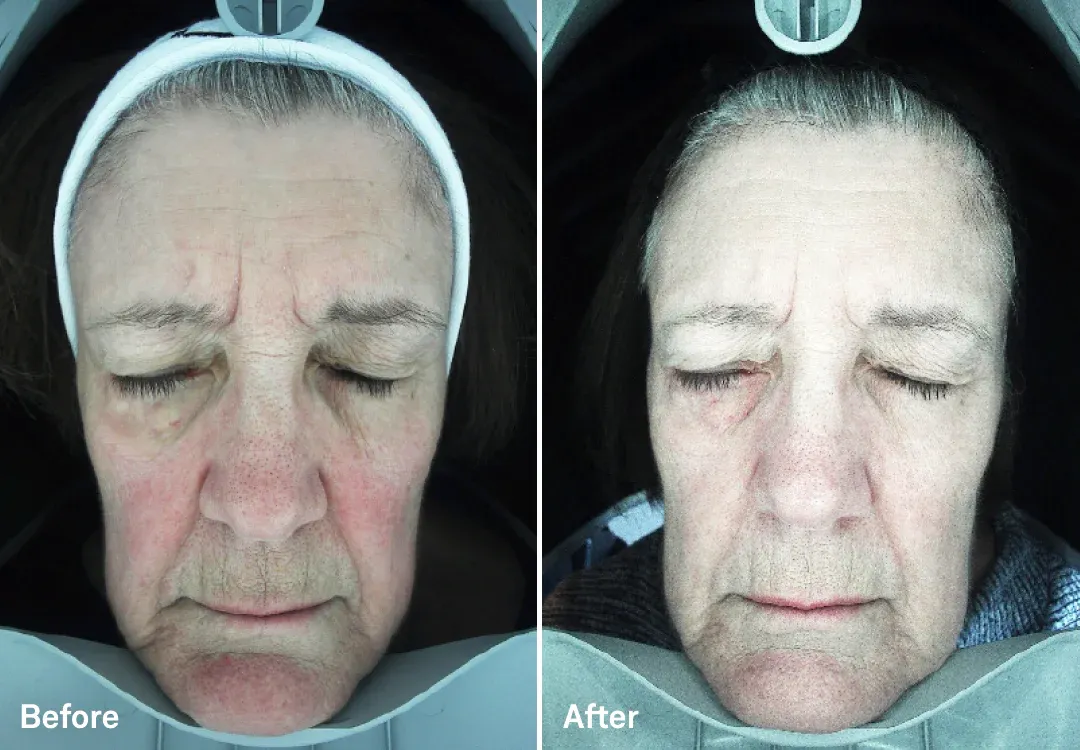
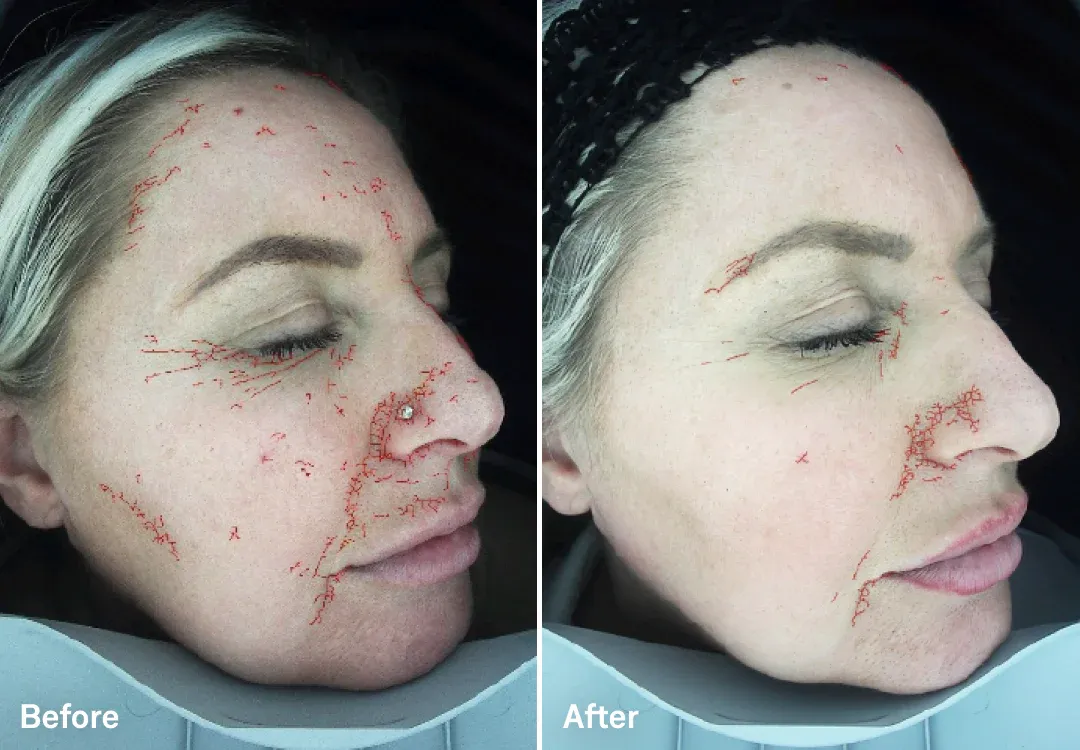
32.6% reduction in wrinkle number and width
- The study summary displays before-and-after images of two participants' visible reduction in wrinkles:
- 16.3% improvement in elasticity
- 12.4% improvement in hydration
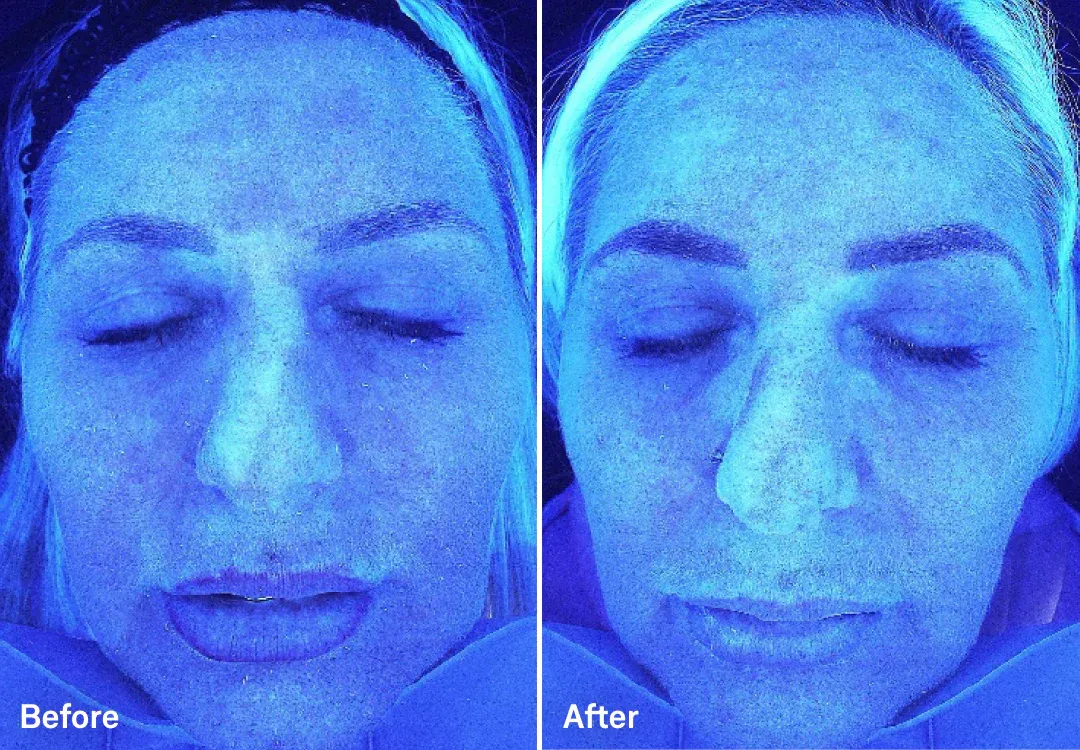
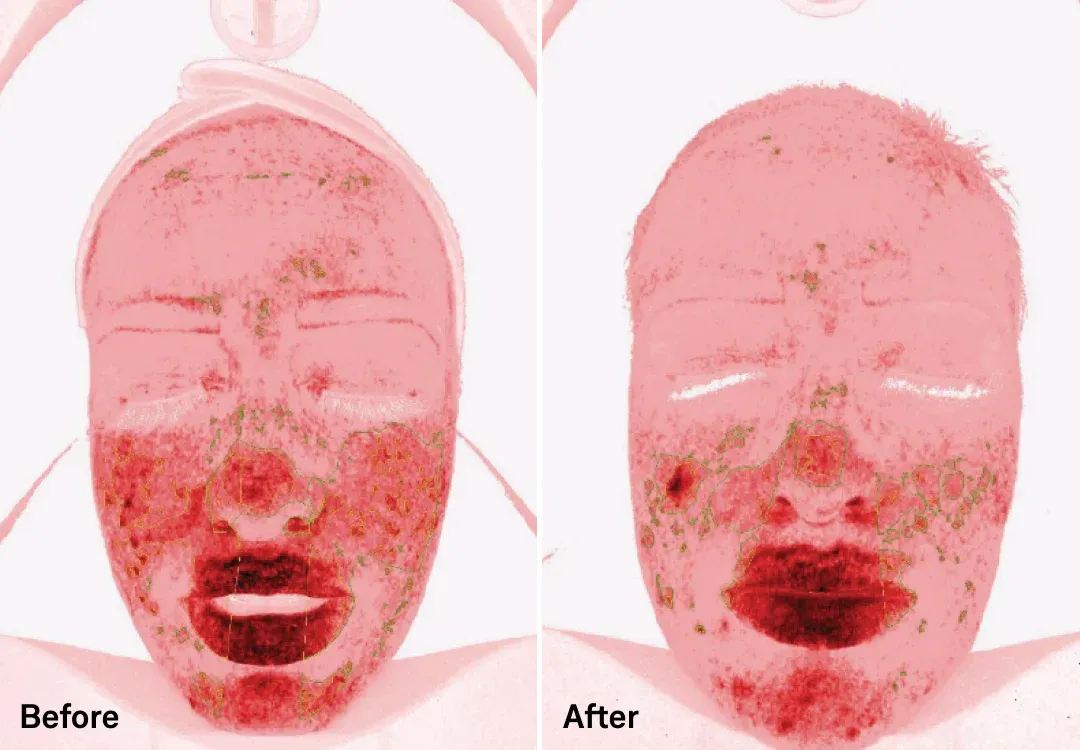
These LED device before-and-after images from the study summary show two participants’ visible reduction in skin redness and pigment:
Reduction in pigment:
Reduction in redness:
The participants' self-assessment responses were also overwhelmingly positive. 93% agreed that their skin felt softer, smoother, brighter, and refreshed after just one treatment. In general, participants felt that they looked more “alive”, with these standout statistics:
- 84% strongly agreed that their skin feels softer and smoother.
- 84% strongly agreed that their skin looks brighter and more refreshed.
- 76% strongly agreed that their skin feels firmer or tighter.
- 72% of participants strongly agreed that their fine lines appear less visible.
You can present this clinical proof, including both statistics and visual evidence, during consultations to educate or reassure clients considering LED light therapy for their aesthetic routine.
What These Results Mean for Your Skin
Now, how exactly do those numbers translate into real-world results for your skin? Metrics aside, the LUMSUME clinical study showed us that with consistent use, this device can help smooth skin texture, soften the appearance of fine lines, and give skin a healthy, hydrated glow. These results add up over time, so sticking to the treatment regimen of three to five 15-minute sessions weekly is crucial.
This clinical study only provided a one-month snapshot of LED light therapy benefits. With continued use over time, you and can build upon these results and experience ongoing improvements.
Blog comments
0 Comments